










Цели урока
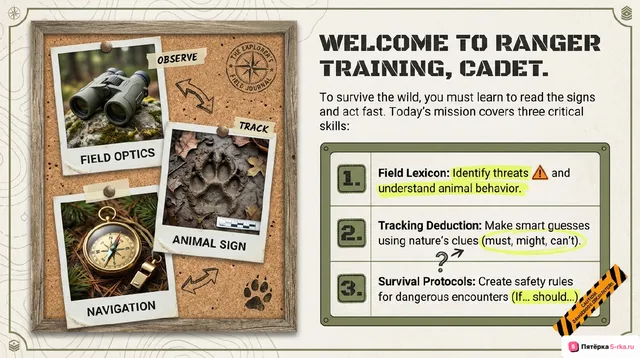
Узнать, какие животные бывают опасны для человека и почему.
Понять английские предупреждения о диких животных.
Различать обязанность, запрет и предположение с must и mustn't.
Передать запрет в косвенной речи без потери смысла.
Вспомним
Danger — опасность, dangerous — опасный, a warning — предупреждение. Wild animals — дикие животные, wildlife — дикая природа. Выражение keep your distance значит «держаться на расстоянии».
Какие животные опасны
Прочитай текст.
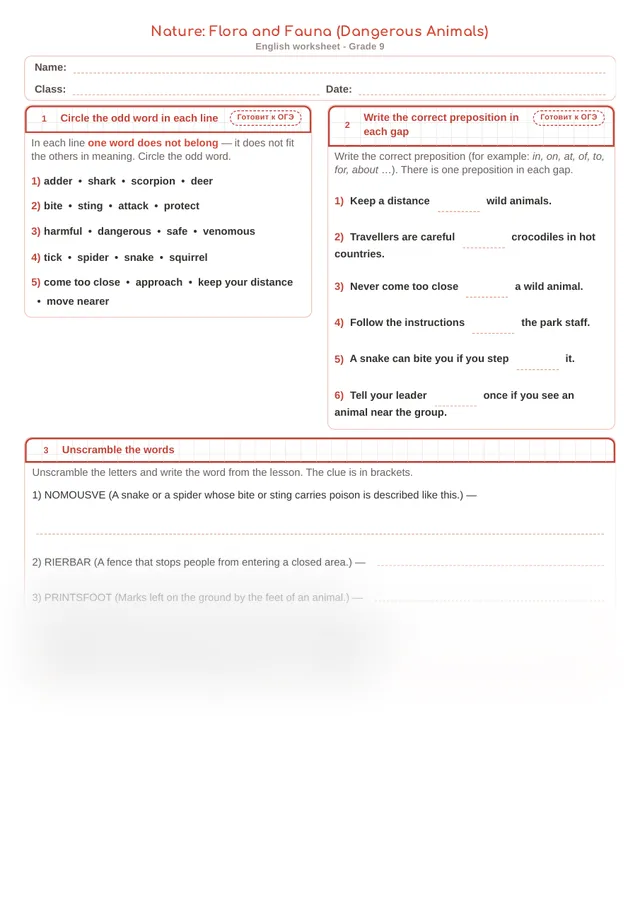
Some animals can be dangerous to people. In Russian forests, a brown bear or a wild boar can attack if it is surprised or if it is protecting its young. Wolves usually avoid people. The common adder is a venomous snake: its bite is painful, and a bitten person needs medical help. Ticks are tiny, but they can carry serious diseases, so after a walk in the forest people check their clothes and skin. In hot countries, travellers are careful of crocodiles, sharks, scorpions and some kinds of spiders. Most wild animals do not hunt people: they attack when they feel threatened or when someone comes too close. That is why the main rules are simple: keep your distance, never feed or touch wild animals and follow the instructions of park staff.
Опасность зависит не от размера: крошечный клещ опаснее многих крупных зверей. Venomous — ядовитый (о змее, пауке, скорпионе: яд попадает в тело при укусе или ужалении). Спокойный вид животного не значит, что к нему можно подойти: The animal looks calm, but it is still wild.
Объявление в парке
Прочитай объявление в парке.