









Цели урока
Узнать, чем интернет отличается от других средств массовой информации, его плюсы и минусы.
Различать в интернете новость, мнение и рекламу; проверять дату и источник.
Передавать сообщение с say и tell, сохраняя его смысл.
Вспомним
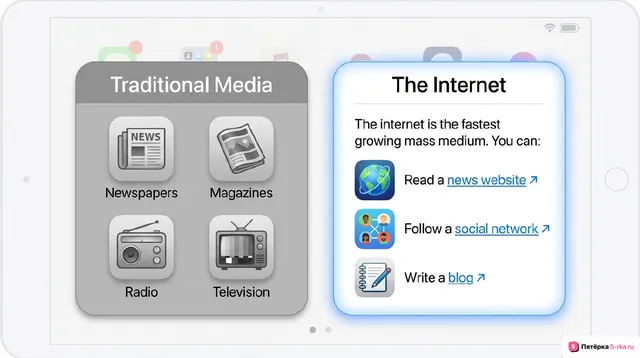
The mass media — средства массовой информации: newspapers, magazines, radio, television and the internet. A headline — заголовок, a source — источник, a link — ссылка. Выражение according to указывает, откуда взято сообщение: According to the notice, the hall is closed today.
Интернет — самое быстрое СМИ
Прочитай текст.
Today the internet is one of the most popular mass media. People read online newspapers and news websites, follow the news on social networks, watch videos and listen to podcasts. The internet is fast: news appears online within minutes, while a printed newspaper comes out only the next day. It is also interactive: readers can comment on articles, share posts and write their own blogs. With a search engine, you can find information on almost any subject. But there is a problem. Anyone can publish anything online, so not all information is true. Some posts contain mistakes, some express opinions, some are advertisements and some are fake news. A careful reader checks who wrote the text, when it was published and whether reliable sources report the same news.
Итак, плюсы интернета: скорость, доступность, обратная связь с читателем, огромный выбор источников. Минусы: много непроверенных и ложных сведений, реклама под видом новостей, заголовки, которые привлекают внимание, но опускают важные условия. Повторение одной новости многими аккаунтами само по себе не делает её достоверной.