





Цели урока
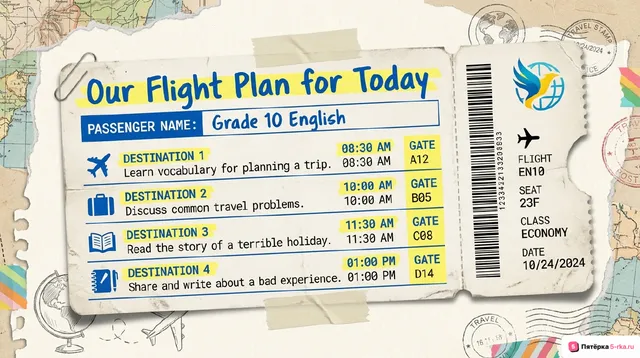
Узнаем слова и выражения для совместной поездки: сборы, расходы, обязанности.
Научимся сравнивать поездку с семьёй и с друзьями и называть плюсы и минусы каждой.
Научимся выражать предпочтения и предлагать компромисс: Why don't we…, How about…, Could we…
Вспомним
I would rather ... than ... и I prefer ... to ... выражают предпочтение. На прошлом уроке мы различали виды поездок: a package holiday, a road trip, camping, backpacking. Сегодня важно, с кем ехать и как договориться.
С семьёй или с друзьями?
Travel with your family — путешествовать с семьёй, travel with friends — с друзьями, travel on your own — одному. A travel companion — попутчик. Двое подростков рассказывают о своих поездках.
> Alina, 16: Every summer I go on holiday with my family. My parents book the hotel and buy the tickets, so I don't have to worry about money or organisation. We have our own traditions: we always go on a boat trip and try local food together. The only problem is that my little brother and I want different things. He wants to stay by the pool all day, and I want to go sightseeing.
>
> Timur, 17: Last August I went on a camping trip with three friends. We planned the route ourselves, shared the costs and took turns cooking. It was cheaper than a family holiday and a lot of fun. But travelling with friends isn't always easy. One evening we argued about where to go next, and we had to find a compromise. I learned to listen to other people.
Плюсы поездки с семьёй: взрослые берут на себя бронирование и расходы, есть общие семейные традиции, рядом близкие люди. Минусы: у членов семьи разные интересы, меньше самостоятельности. Плюсы поездки с друзьями: общие интересы, свобода, расходы делят на всех (share the costs). Минусы: всё приходится организовывать самим, и бывают споры.