












Цели урока
Узнаем, какие демографические проблемы стоят перед современным миром: старение населения, низкая и высокая рождаемость, рост городов.
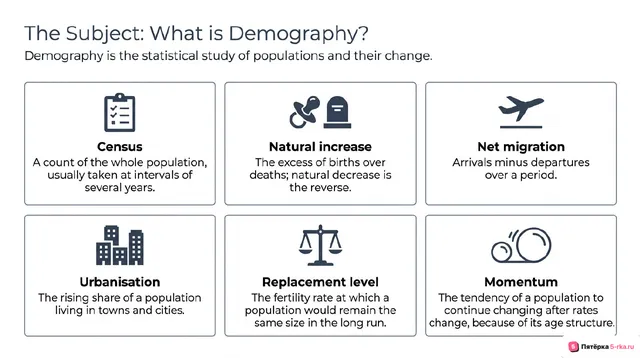
Выучим слова для разговора о населении: birth rate, life expectancy, ageing population, workforce.
Научимся описывать изменения в цифрах: rise sharply, fall slightly, remain stable, increase by / to.
Вспомним
На уроке о развивающихся странах мы выучили life expectancy, literacy, developing / developed country.
Наречия образуются суффиксом -ly: slow — slowly, steady — steadily.
a billion — миллиард; после числа без -s: eight billion people.
Текст для чтения: Too Many or Too Few?
In November 2022 the United Nations announced that the population of the Earth had reached eight billion people. Only two hundred years earlier, there had been about one billion. Such fast growth became possible because medicine, clean water and better food helped people live much longer and saved the lives of millions of children.
However, the picture is very different in different parts of the world. In many developing countries families are still large, and the population is growing fast. Governments must build more schools and hospitals and find jobs for millions of young people.
In many developed countries, on the contrary, the birth rate has fallen: families have one or two children, and some couples decide not to have children at all. At the same time life expectancy keeps rising. As a result, the population is ageing: the share of people over 65 grows, while the share of young people shrinks. In many European countries and in Japan this is already a serious challenge. Fewer young people enter the workforce, but more money is needed for pensions and medical care.