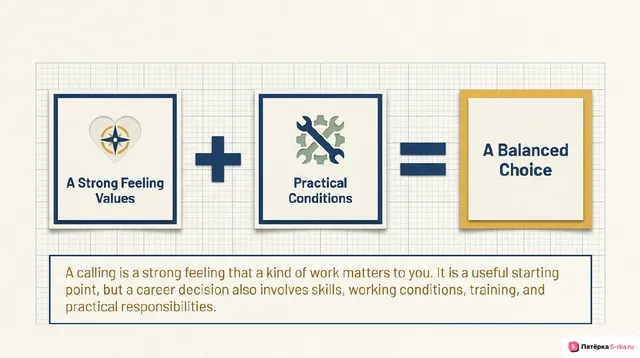


A calling is a strong feeling that a kind of work matters to you and suits your interests or values. It can be a useful starting point, but a career decision also involves skills, working conditions, training and practical responsibilities. A person may care deeply about a field and still need time to discover which role within it is suitable.
A personal decision
Nina enjoys helping people understand difficult ideas. Her friends say she should become a teacher, but she is not sure. She likes explaining things to a small group; she has never managed a whole class. Instead of treating one enjoyable experience as a final answer, she decides to help at a supervised community learning club and talk to people who do different kinds of educational work.
“I see myself working with people,” she says. “I might try and help at the club this term. I’m thinking of taking a course in communication. If I can, I’ll speak to two teachers about their ordinary working week. What I’d really like to do is make learning less frightening. I’m really dreading choosing too quickly and discovering that I ignored an important part of the job.”
Her friend Adam is interested in designing useful objects. He says, “I’ve always dreamed of creating things that people use every day. I desperately want to do work that feels useful. I long to become a designer, but I need to learn more about materials, teamwork and deadlines. A small project will help me test my interest.”
Neither student has a guaranteed answer. Both turn an ambition into a manageable next step. Their uncertainty does not mean that they have failed to make progress.