

Цели урока
Узнать, как возник и менялся туризм: от Гран-тура до массовых поездок и бронирования онлайн.
Обсудить перспективы туризма: космический и виртуальный туризм, «зелёный» туризм, проблему перегруженных мест.
Использовать used to для прошлого и may / might / will probably для прогнозов.
Вспомним
В предыдущих темах рассматривались транспорт, достопримечательности и гостиница. Пригодятся itinerary, accommodation и booking: план маршрута, размещение и бронирование. Past Simple сообщает о завершённом событии, а Present Simple — об обычной практике.
Read: From the Grand Tour to online booking
People have always travelled — to trade, to visit holy places or to find new land. Tourism, travelling for pleasure and education, is much younger. In the 17th and 18th centuries, young men from rich British families used to go on the Grand Tour, a long journey through France and Italy. They studied art and ancient ruins, learnt foreign languages and returned home with paintings and books. Such journeys took months and were only for the rich.
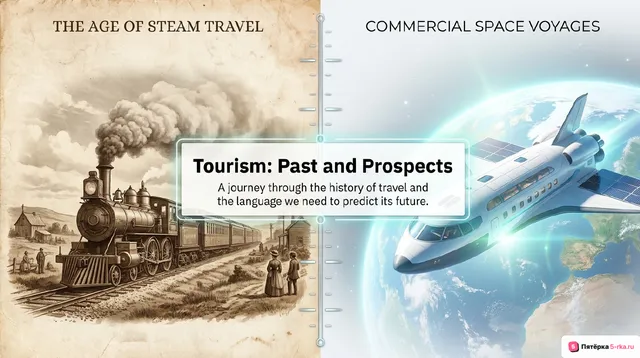
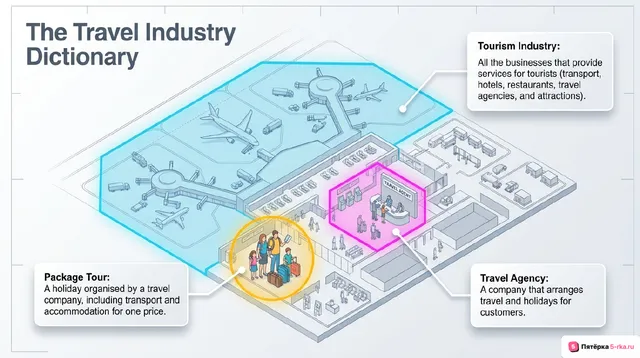
In 1841, Thomas Cook organised a railway trip for several hundred people from Leicester to Loughborough. Later his company began to sell organised tours with transport, hotels and a guide, and this is often seen as the beginning of the modern package holiday. Railways and steamships made travel faster and cheaper in the 19th century. In the 20th century, paid holidays, cars and, later, cheap flights turned tourism into a mass activity. People used to buy tickets and book hotels through travel agents; today millions of travellers compare prices and book everything online themselves.
To sum up: the Grand Tour (17th–18th centuries) → Thomas Cook's first organised trip (1841) → railways and steamships (19th century) → mass tourism (20th century) → online booking (today).