











Цели урока
Обсудить, зачем люди путешествуют и как поездки влияют на человека.
Различать событие, реакцию и вывод в рассказе о поездке.
Устанавливать порядок событий с Past Simple и Past Perfect.
Вспомним
Used to описывает прежнюю привычку или состояние, а Past Simple — завершённое событие. Рассказ о поездке отличается от списка достопримечательностей: он показывает, что произошло и почему это было важно для рассказчика. Выражения at first, later и afterwards помогают следить за последовательностью.
Read: Why do people travel?
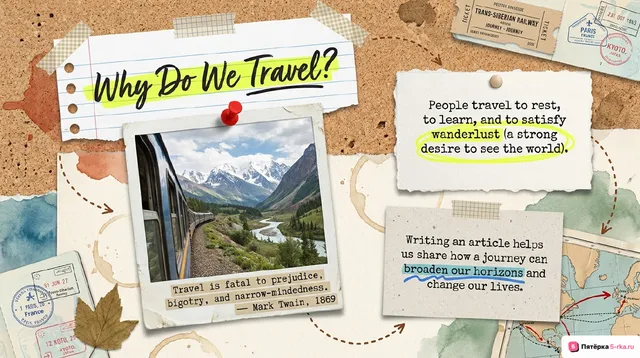
People travel for many different reasons. Some want to rest by the sea or in the mountains. Others want to see famous sights, visit relatives, study abroad or go on a business trip. Many people travel simply because they are curious about the world.
Travelling can change a person. It broadens the mind: you see how other people live, try new food, hear another language and learn to respect different traditions. It also makes people more independent, because travellers have to plan their route, solve problems and talk to strangers. Journeys have shaped history and culture too. In the 15th century, the Tver merchant Afanasy Nikitin travelled to India and described its people, customs and markets in his notes "A Journey Beyond the Three Seas". Of course, one trip does not make anyone wise: what matters is what the traveller notices and learns.
Итак, люди путешествуют, чтобы отдохнуть, увидеть мир, навестить близких, учиться или работать. Поездки расширяют кругозор, учат уважать чужие обычаи и делают человека самостоятельнее. Но сама по себе дорога ничего не гарантирует: важно, что путешественник заметил и понял.