







Цели урока
Узнать, что такое экотуризм, и его основные правила.
Отличить рекламное обещание от конкретных условий экологичной поездки.
Выражать цель действия с помощью to и so that.
Вспомним
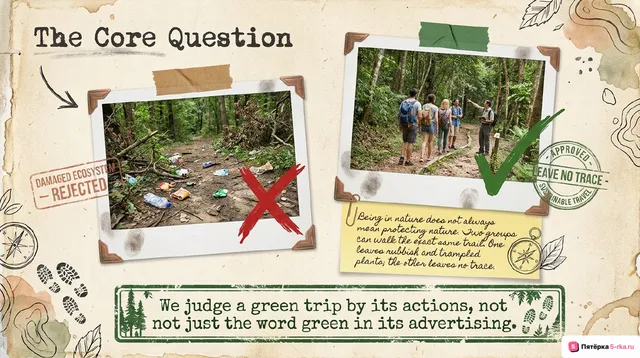
Поездка на природу ещё не означает, что она бережёт природу. Две группы могут пройти по одной тропе, но одна оставит мусор и вытопчет растения, а другая — нет. Поэтому об экологичности судят по действиям, а не по слову green в рекламе.
Что такое экотуризм
Прочитай текст.
What is ecotourism?
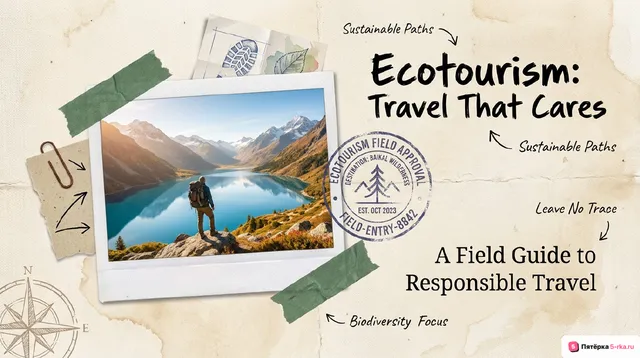
Ecotourism is responsible travel to natural areas. It helps to protect the environment and brings benefits to local people. Eco-tourists visit national parks and nature reserves, go hiking or birdwatching, and often stay in small guest houses run by local families. In Russia, many national parks, for example on the shores of Lake Baikal, have special eco-trails for visitors.
Eco-tourists follow simple rules. They stay on marked paths, take their rubbish home and use refillable bottles. They do not feed or disturb wild animals and do not pick plants. Groups are kept small, and local guides tell visitors about the plants, animals and traditions of the area.
Ecotourism helps local communities earn money and teaches travellers to respect nature. However, if too many tourists come to one place, even ecotourism can damage it. That is why some parks limit the number of visitors.
Ecotourism — экотуризм, responsible — ответственный, nature reserve — заповедник, national park — национальный парк, wildlife — дикая природа, disturb — беспокоить, local community — местные жители.
Обещание или конкретные условия
Сравни два описания поездки.