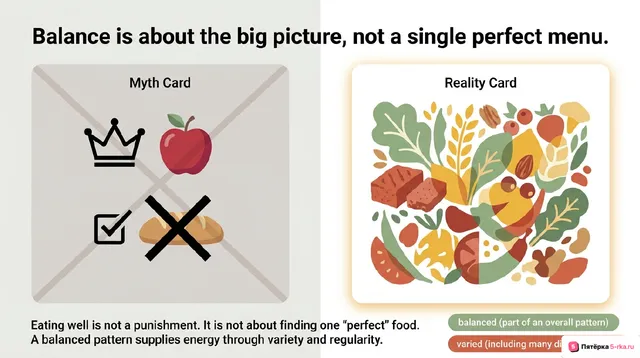


Balanced eating is about variety, regularity and context—not a single perfect menu or a punishment for eating a particular food.
Nutrient roles
Carbohydrates are an important energy source. Proteins supply amino acids used in growth and repair. Fats provide energy and support normal body functions. Fruit, vegetables, whole grains and legumes can contribute vitamins, minerals and fibre. Water supports hydration.
A flexible plate model
One common visual model places vegetables and fruit, a whole-grain or other carbohydrate source, and a protein source in the same meal, with water available. It is a planning aid, not a medical prescription; needs differ with age, activity, culture, allergy and health.
Two label cards
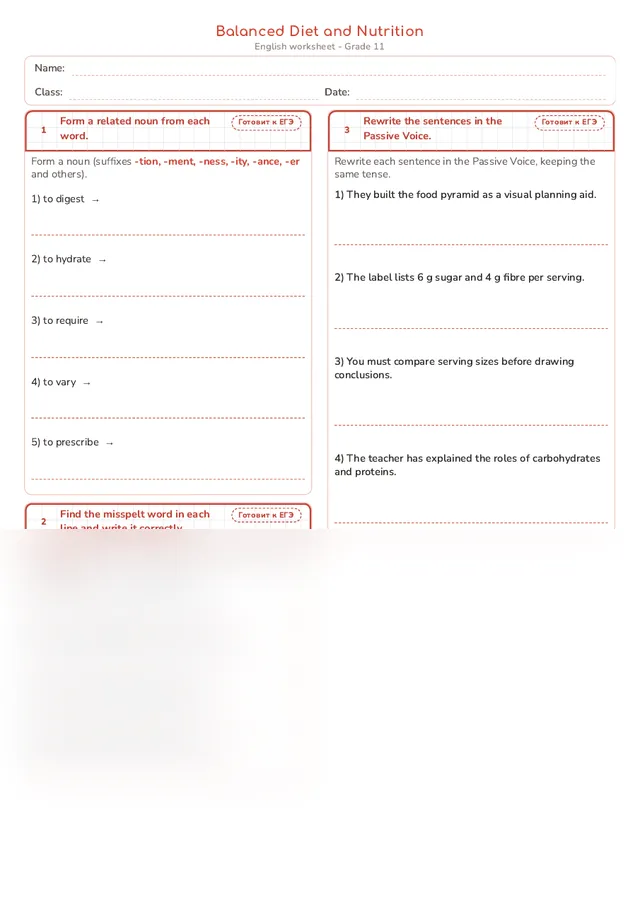
Per serving, Snack A lists 6 g sugar and 4 g fibre. Snack B lists 15 g sugar and 1 g fibre. These numbers allow only limited comparisons about sugar and fibre; they do not prove which product is suitable for a particular person.
Choice language
Use nutritious, portion, in moderation, home-cooked and food label. Avoid calling a person good or bad because of food.
Food and label reading
A broad food-group check can note carbohydrate-rich foods, protein sources, varied plant foods, fats and fluids without prescribing a medical diet. Fictional label A lists 6 g sugar and 4 g fibre per serving; label B lists 15 g sugar and 1 g fibre. Serving sizes must be compared before general conclusions are drawn.