

Preparing for a conversation
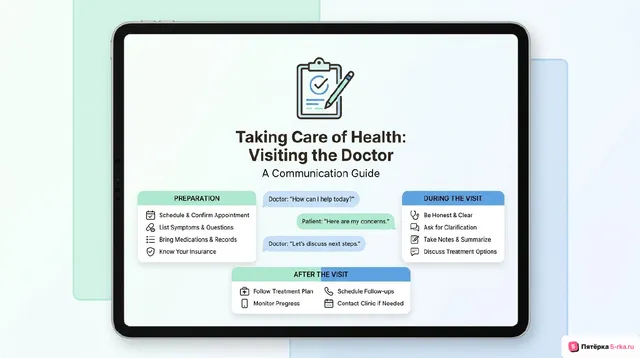
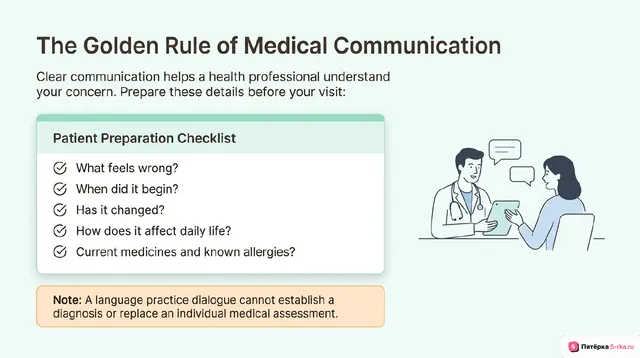
Clear communication helps a health professional understand a concern. A patient can explain what feels wrong, when it began, whether it has changed and how it affects daily life. Information about current medicines and known allergies may also be important. A language practice dialogue cannot establish a diagnosis or replace an individual medical assessment.
Useful vocabulary
symptom — a change a person notices when something may be wrong
dizzy — feeling unsteady or as if things are moving
temperature — in a health conversation, often a raised body temperature
prescription — a written or electronic instruction for medicine
follow-up — a later check on how a person is doing
A fictional consultation
Doctor: Hello, Jamie. What would you like help with today?
Jamie: I've had a sore throat since Monday. My head started aching yesterday, and I feel tired.
Doctor: Has anything changed since it started?
Jamie: The throat feels worse when I swallow. I haven't noticed a rash.
Doctor: Have you measured your temperature?
Jamie: No, I haven't. I don't want to guess.
Doctor: Thank you. Are you taking any medicines, and do you have any known allergies?
Jamie: I haven't taken anything for this problem. I have a list of my regular medicines and allergies here.
Doctor: Good. I'll ask a few more questions and examine you before we decide what to do.
Jamie: Could you explain what the examination involves?
Doctor: Of course. I'll explain each step first.