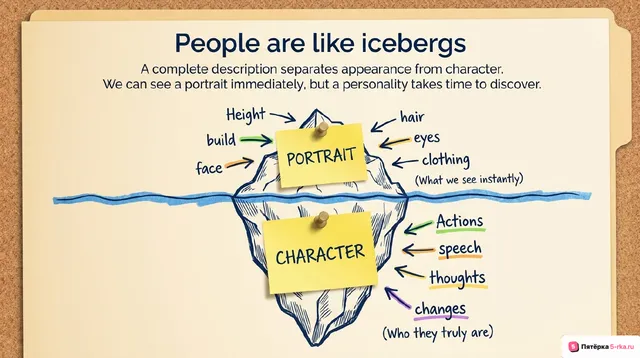


A complete description separates appearance from character. Height, build, face, hair, eyes and clothing form a portrait; actions, speech, thoughts and changes across a story reveal personality. A conclusion connects the evidence instead of repeating adjectives.
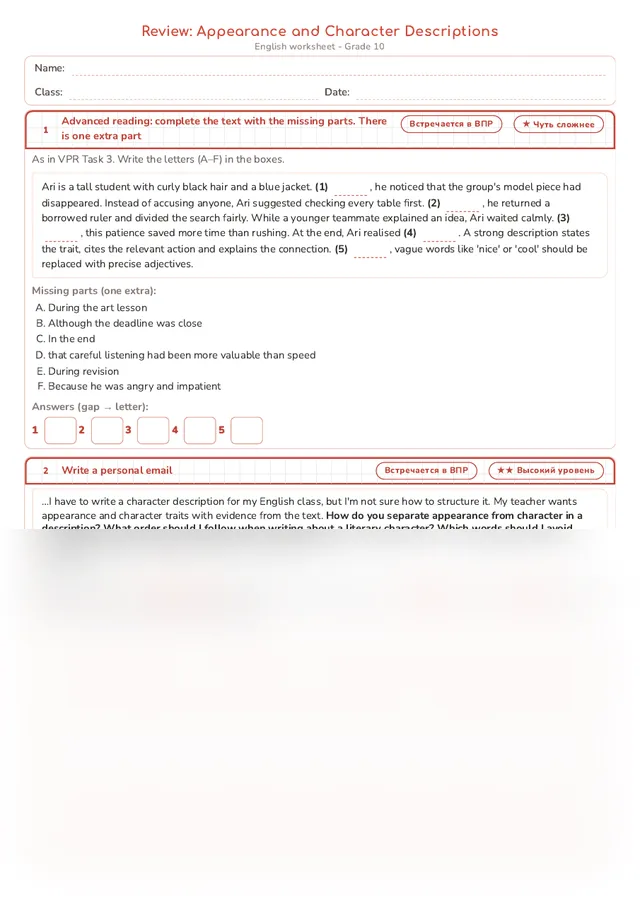
Built-in literary scene, ‘The Missing Model’. Ari, a tall student with curly black hair and a blue jacket, noticed that the group's model piece had disappeared. ‘Let's check every table before we blame anyone,’ Ari said. Although the deadline was close, Ari returned a borrowed ruler, divided the search fairly and waited while a younger teammate explained an idea. At the end, Ari realised that careful listening had saved more time than rushing.
In this scene the portrait supplies visible details, while the actions and speech support traits such as fair, patient and responsible. The final thought shows a small change in Ari's understanding. A strong analysis states the trait, cites the relevant action or words and explains the connection.
A useful paragraph order is identification, two or three appearance details, two character traits with evidence, one comment on change and a closing judgement. Precise words replace vague praise such as nice, good or cool.
Reader's route
A literary portrait gives appearance, while actions, speech, thoughts and development supply evidence about character.
A character claim should name a trait, cite a detail and explain how the detail supports the claim.