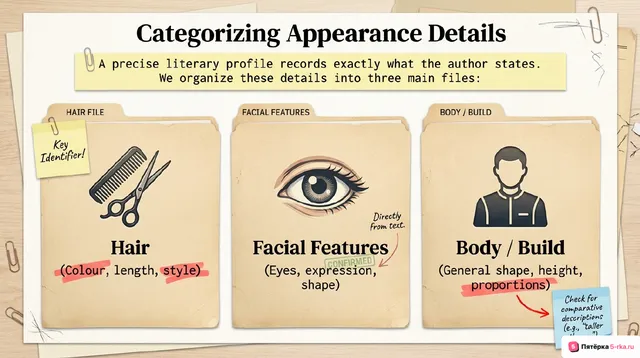


Appearance vocabulary can be organised into hair, facial features and body or build. A precise description records what a literary source states; it does not turn a visible feature into proof of personality.
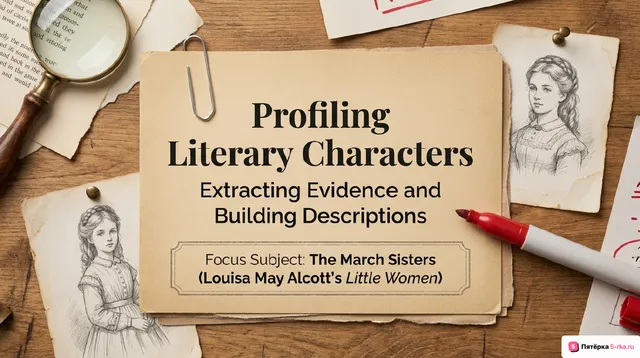
Louisa May Alcott's novel Little Women follows the March sisters. The supplied material distinguishes them through these appearance details: Meg has soft brown hair and large eyes; Jo is tall and thin, with long thick hair and long limbs; Beth is smooth-haired and bright-eyed, with a peaceful expression; Amy is slender, blue-eyed and fair-haired, with curling hair. This is a compact factual profile, not a quotation from the absent extract.
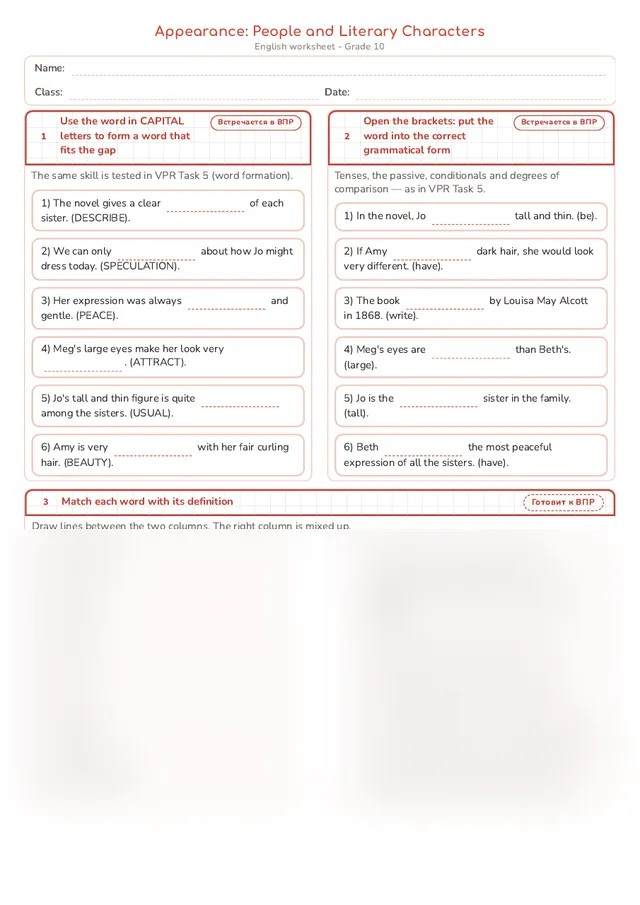
Many two-part adjectives take a hyphen: green-eyed, long-legged, broad-shouldered, baby-faced and kind-hearted. In green-eyed, the colour comes first and the body feature takes -ed; in long-legged, the measurement word comes first.
To speculate about a modern version of a character, separate evidence from imagination: ‘Jo is described as tall and long-legged. In a modern setting, she might wear practical clothes.’ The first sentence reports the profile; might marks the second as a possibility.
Precise vocabulary
appearance: the visible way a person is described.
build: the general shape and proportions of a person's body.
compound adjective: one adjective formed from two linked elements, often written with a hyphen.
speculation: an idea presented as possible rather than as a stated fact.
Communication goal
Little Women by Louisa May Alcott and the four March sisters remain the named literary object of the lesson.
Hair, facial features and body or build are separate categories for organising appearance details.
Compound adjectives such as blue-eyed and long-legged are normally hyphenated when used as one description.
May or might marks speculation and keeps it separate from details supplied by the literary source.