










Цели урока
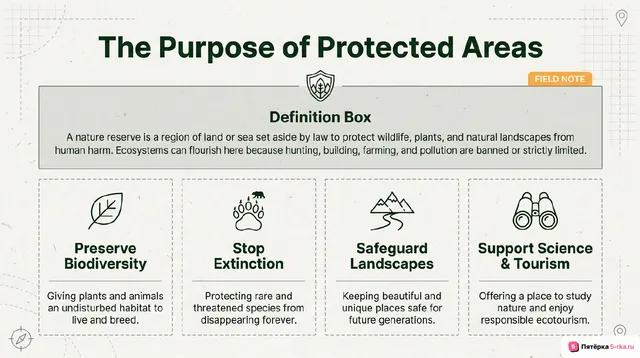
Узнаем, чем заповедник отличается от национального парка и зачем нужны охраняемые природные территории.
Познакомимся с известными заповедниками России и первым в мире национальным парком.
Повторим определительные придаточные предложения с who, which, that, where, whose.
Научимся формулировать правила для посетителей с помощью пассива: Fishing is not allowed. Plants must not be picked.
Вспомним
На уроке о сохранении флоры и фауны мы говорили о редких видах (endangered species) и о среде обитания (habitat).
must — «нужно, обязательно»; mustn't — «нельзя».
Пассив с модальным глаголом: модальный глагол + be + V3: Rubbish must be taken home.
Читаем: Places where nature comes first
In Russia there are two main kinds of protected areas. A zapovednik is a strict nature reserve where nature is left almost untouched. Hunting, fishing, cutting trees and building are prohibited there, and visitors can usually enter only with a permit and walk only along special eco-trails. A national park is less strict: part of it is open to tourists, who can walk along marked trails, camp in special places and visit nature museums.
The oldest zapovednik in Russia is Barguzinsky, which lies on the shore of Lake Baikal. It was founded more than a hundred years ago to save the sable, whose valuable fur had made it a target for hunters. Thanks to strict protection, the number of sables there grew again.
Another famous reserve is Kronotsky in Kamchatka. It is home to the Valley of Geysers, where hot water and steam shoot up from the ground, and to many brown bears.