










Цели урока
Рассказать по-английски, как живут и чем занимаются люди в селе, о плюсах и трудностях сельской жизни.
Различать used to, be used to и get used to.
Составить связный рассказ о переезде в село.
Вспомним
На уроке о городе и селе мы назвали главные плюсы сельской жизни (fresh air, peace and quiet, cheaper houses) и минусы (fewer jobs, services far away, few buses). Сегодня — подробнее о том, как устроена жизнь в селе и как она меняется.
Как живут в селе
Прочитай текст.
Life in the countryside
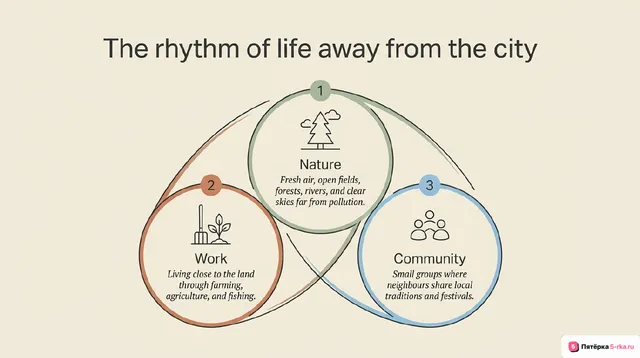
People in the countryside do many different jobs. Some work on farms, grow crops or keep cows, sheep and hens. Others work at the local school, shop, library or post office, and some now work from home online. Many families have a kitchen garden where they grow potatoes, cucumbers and tomatoes, and in summer children help their grandparents pick berries.
Villagers enjoy fresh air, peace and quiet and beautiful nature around them. They can go fishing in the river or pick mushrooms in the forest. Houses are usually cheaper than in cities, and neighbours know each other well and help each other.
However, rural life has its difficulties. There are fewer jobs, and the nearest hospital, college or big shop may be many kilometres away. Buses do not run often, and in some villages the roads are poor. There is little entertainment for teenagers, so many young people move to cities after school. Things are changing, though: fast internet and new roads make village life more comfortable.
Countryside — сельская местность, crops — посевы, сельхозкультуры, keep hens — держать кур, kitchen garden — огород, pick mushrooms/berries — собирать грибы/ягоды, villager — сельский житель, rural — сельский.