







Цели урока
Узнать, куда попадает мусор и почему он опасен для природы.
Различать reduce, reuse, recycle и правила раздельного сбора.
Описывать обращение с отходами в пассивном залоге.
Вспомним
Waste — отходы; litter — мусор, брошенный где попало. Пассивный залог показывает, что происходит с предметом, а не кто действует: Paper is collected. The bottles were recycled.
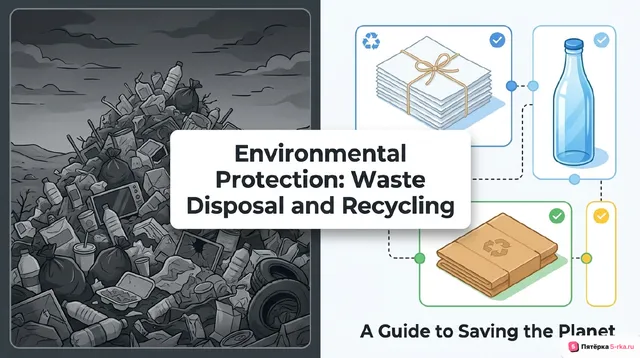
Куда девается мусор
Прочитай текст.
What happens to our rubbish?
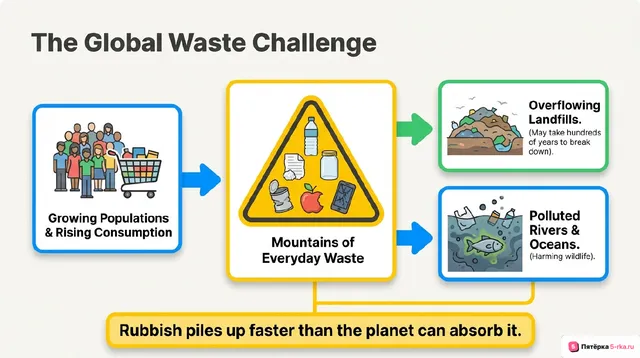
Every day people throw away food scraps, packaging, plastic bottles, glass jars, paper, old clothes and broken electronics. Most household waste ends up at landfill sites, where it can lie for many years. Some waste is burnt at special plants. Plastic takes hundreds of years to break down, and litter pollutes soil and water and harms birds and animals.
The best answer is the "three Rs". First, reduce: buy only what you need and avoid unnecessary packaging. Second, reuse: use things again, give old clothes to others and carry a reusable bag. Third, recycle: glass, paper, metal and some kinds of plastic can be turned into new products. Food waste can be composted. Batteries and electrical items must never go into an ordinary bin: they are taken to special collection points. In many towns, waste is sorted into separate containers.
Landfill site — свалка, полигон, break down — разлагаться, reduce — сокращать, reuse — использовать повторно, recycle — перерабатывать, compost — превращать в удобрение (компост), sort — сортировать.