







Цели урока
Узнаем слова о Вселенной и поиске жизни: universe, galaxy, solar system, exoplanet, extraterrestrial life.
Разберёмся, какие условия нужны для жизни и где учёные её ищут.
Научимся делать предположения о настоящем и прошлом с модальными глаголами must, may, might, could, can't.
Научимся высказывать мнение на тему «Есть ли жизнь за пределами Земли?» и приводить доводы.
Вспомним
Модальный глагол стоит перед глаголом без частицы to: You must be tired. It can't be true.
Второй тип условных предложений — о воображаемом: If we found water, we would be happy.
Слова planet, star, space знакомы с прошлых классов, слово habitat — с уроков о природе.
Наш адрес во Вселенной
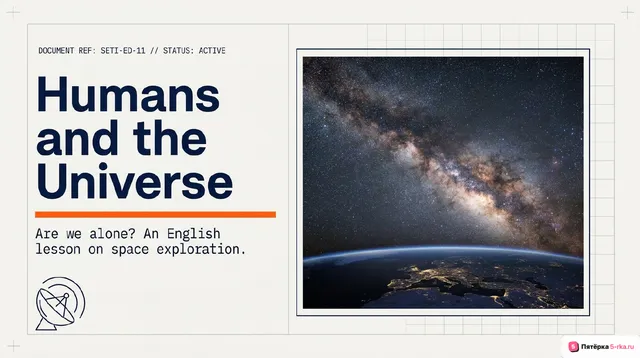
Земля — третья планета от Солнца, Солнце — одна из миллиардов звёзд галактики Млечный Путь: The Earth is the third planet from the Sun. The solar system is part of the Milky Way.
Обратите внимание на артикли: the Universe, the Sun, the Moon, the Milky Way — с the, а названия планет пишут без артикля: Mars, Venus, Jupiter, Saturn. Earth бывает и без артикля: life on Earth.
Читаем: Are we alone?
For centuries people have looked at the night sky and asked the same question: are we alone in the Universe? Today scientists are trying to answer it with powerful telescopes, space probes and rovers.
First of all, scientists look for places where liquid water might exist, because every living thing on the Earth needs water. Mars is cold and dry today, but rovers have found signs that rivers and lakes existed there long ago. Some moons of Jupiter and Saturn, such as Europa and Enceladus, are covered with thick ice, and scientists believe there are oceans under that ice.
Secondly, astronomers have discovered thousands of exoplanets — planets that move around other stars. Some of them are neither too hot nor too cold, so water on their surface would not freeze or boil away.