











Цели урока
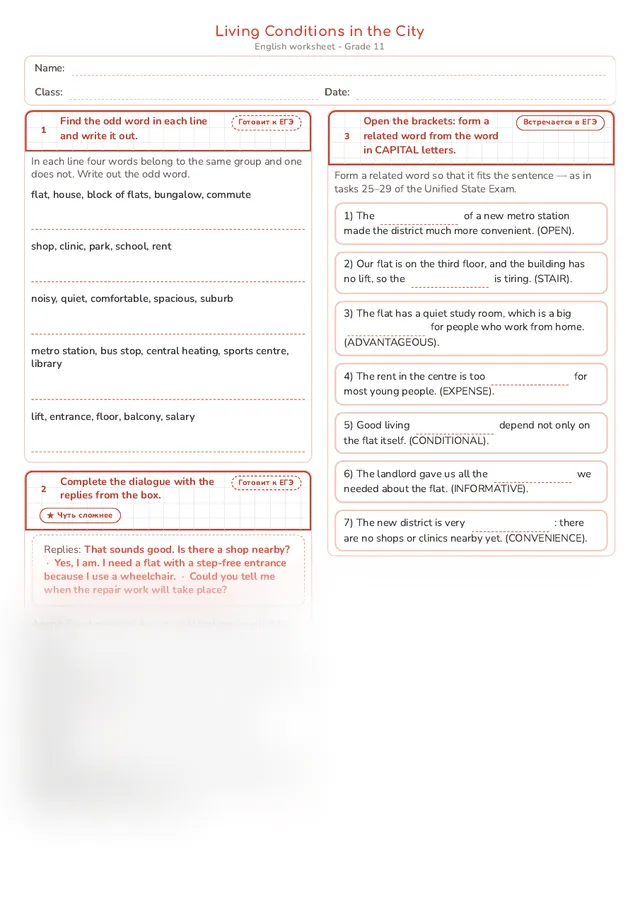
Описать по-английски городское жильё, услуги и транспорт рядом с домом.
Сравнить два варианта жилья по потребностям конкретного человека.
Использовать too и enough для объяснения ограничений.
Вспомним
На уроке о городе и селе мы сравнивали их преимущества и недостатки. Сегодня подробнее о том, из чего складываются условия жизни в городе. There is a lift сообщает о наличии лифта, The lift is working — о его состоянии, The lift is large enough for a pram — о том, подходит ли он для конкретной задачи. Слово comfortable в объявлении ещё ничего не объясняет.
Жильё и инфраструктура
Прочитай текст.
Living in a city
Most city people live in flats in large blocks of flats; some high-rise buildings have more than twenty floors. Families who want more space often move to the suburbs, where there are houses with small gardens, but the journey to the centre takes longer. Many young people rent a flat because buying one is expensive, and in big cities the rent can take a large part of a salary.
Good living conditions depend not only on the flat itself. People want central heating, hot water and fast internet at home, and they also want useful amenities nearby: shops, a school, a clinic, a park and a sports centre. Good public transport is important too: a metro station or a bus stop within walking distance makes the daily commute much easier. On the other hand, flats near busy roads are often noisy, and new districts sometimes have too few schools and shops.
Block of flats — многоквартирный дом, high-rise — высотный, suburbs — пригород, окраины, rent — снимать жильё; арендная плата, amenities — удобства и объекты рядом с домом, within walking distance — в пешей доступности, commute — ежедневная дорога на работу или учёбу.